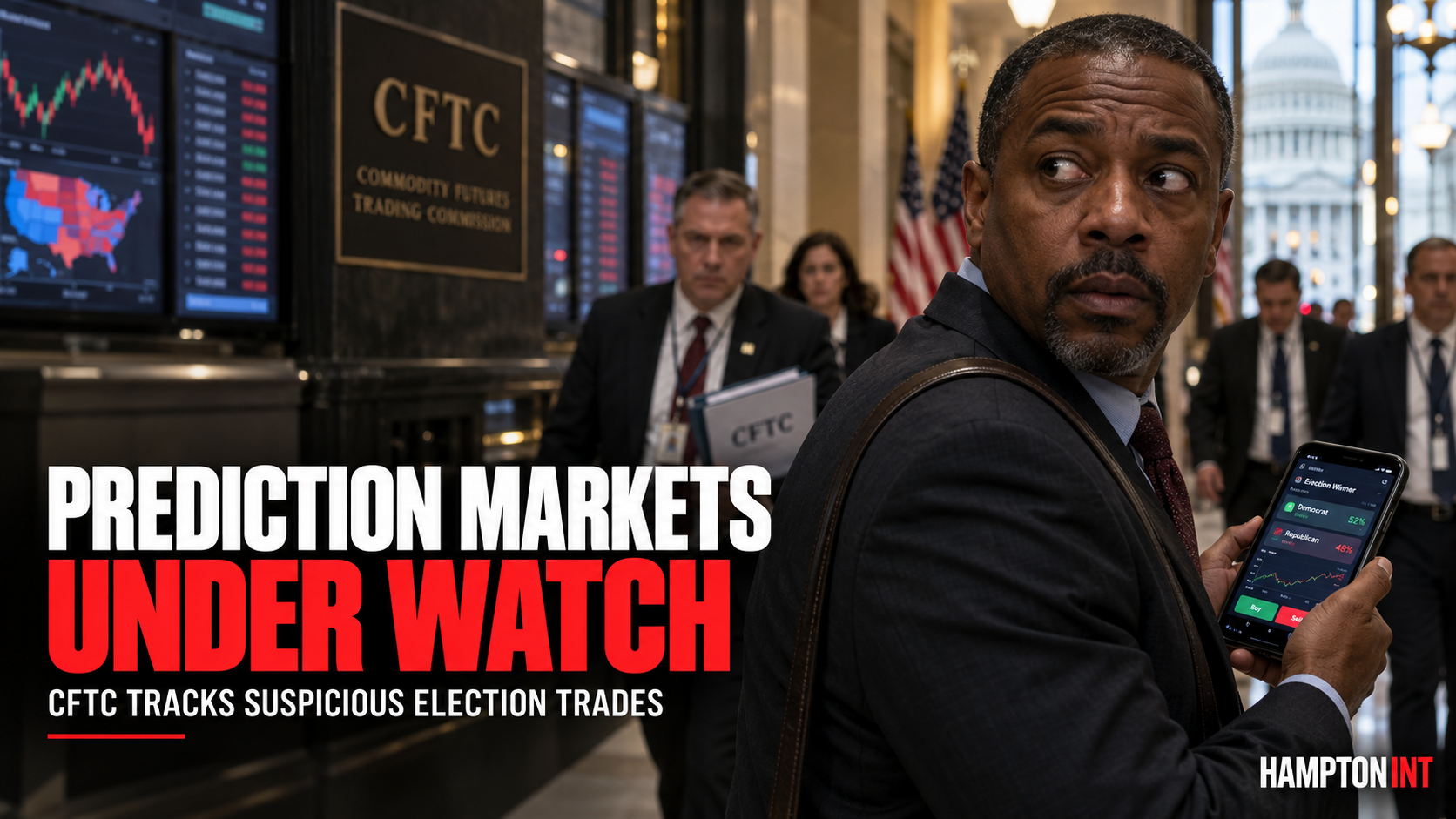
Breaking: CFTC Confirms Election-Market Trading Scrutiny
On October 22, CFTC Enforcement Director David Miller confirmed that the agency has scrutinized suspicious prediction-market trading around elections — including candidates wagering on their own races. He also confirmed an active investigation into suspicious oil trading surrounding U.S. military decisions involving Iran.
The CFTC had previously warned that misuse of confidential information and fraud on prediction markets can violate federal commodities law. This confirmation moves the agency from warning to action.
What Changed
Until now, CFTC oversight of prediction markets had been largely structural — approving or challenging platforms' legal standing to operate. Miller's public confirmation of active integrity investigations is a different posture entirely. The regulator is now following individual trades, not just platform licenses.
The dual focus is notable: election markets and energy markets. Both involve actors who may possess non-public information that could move contract prices — candidates who know their own campaign's internal polling, and military or intelligence officials who know about pending decisions affecting oil supply.
Why It Matters
The federal regulator is moving beyond theory and publicly acknowledging active integrity investigations. That puts traders, candidates, and platform surveillance systems under a brighter light heading into the midterms.
Prediction markets spent years arguing they deserved the same regulatory legitimacy as traditional financial markets. That argument succeeded — Kalshi won CFTC approval, and event contracts are now a recognized derivatives product. But financial-market status brings financial-market enforcement. The same insider-trading and market-manipulation frameworks that govern equities and futures are now being applied to yes-or-no election contracts.
One significant enforcement case could force platforms to strengthen account monitoring, disclose more suspicious activity, and restrict politically connected traders from participating in markets tied to their own decisions.
Three Angles Worth Watching
The Prediction Markets Are Being Watched
Federal scrutiny is now following the money behind election trades. The CFTC's public confirmation signals that surveillance infrastructure is already in place — and that enforcement actions may follow.
Should Candidates Be Allowed Near Their Own Markets?
Even small wagers can damage trust when insiders trade on outcomes they can influence. The question of whether candidates, campaign staff, and political operatives should be permitted to trade election contracts at all is now a live regulatory issue, not a hypothetical.
Prediction Markets Wanted Legitimacy — Now Comes Surveillance
Financial-market status brings financial-market enforcement. Platforms that fought for CFTC approval now inherit the full compliance burden that comes with it — including suspicious activity reporting, account monitoring, and potential liability for facilitating insider trading.
HamptonINT Outlook
Watch for the first enforcement action. A public case — even a civil penalty — would establish the precedent that prediction-market trading is subject to the same insider-trading standards as traditional securities. That would reshape how platforms vet politically connected accounts and how candidates and their advisors interact with election markets. The CFTC's public confirmation is the warning shot. The enforcement case is the one that changes the industry.
Educational commentary only — not gambling or financial advice.
Stay Updated
Subscribe to our newsletter and get the latest updates, news, and offers straight to your inbox.