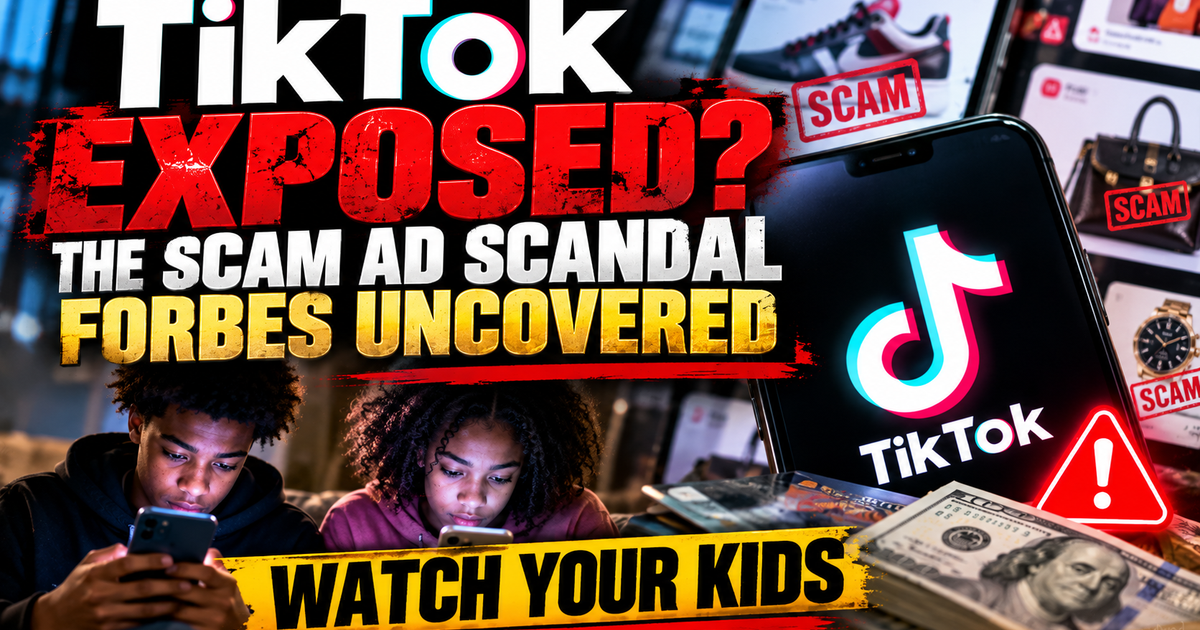
WATCH YOUR KIDS — AND YOUR MONEY!
Did TikTok Put Advertising Revenue Ahead of Consumer Protection?
A Forbes investigation has raised serious concerns about TikTok's advertising practices, alleging that the social media giant quietly weakened its advertising rules, making it easier for fraudulent advertisers to target American consumers.
According to Forbes, the changes opened the door to scammers promoting products that customers paid for but never received. Even more concerning, sources reportedly told Forbes that the changes were understood internally as a way to generate more advertising revenue.
The allegations raise an important question: When social media companies make money from advertising, who is responsible when those advertisements lead consumers into scams?
The Real Risk: Entertainment Meets Your Wallet
TikTok is no longer just a platform for dancing, comedy, and viral videos. It has evolved into a digital marketplace where entertainment, advertising, and shopping exist side by side.
That creates opportunities for legitimate businesses, but it also creates opportunities for fraud.
Consumers can encounter a product in a video, click an advertisement, and make a purchase within minutes. The problem? A professional-looking advertisement doesn't guarantee a legitimate business.
Parents, Pay Attention
Young people are growing up in an environment where shopping, entertainment, and financial transactions are increasingly connected.
A viral video can influence purchasing decisions. An influencer can build trust with an audience. A convincing advertisement can make a questionable product appear legitimate.
Parents should understand what their children are watching, what they're clicking, and where their money is going.
This isn't about banning technology. It's about understanding the risks that come with digital convenience.
Who Should Be Held Accountable?
Fraudulent advertisers should face consequences. But what responsibility do platforms have when they profit from displaying those advertisements?
Should companies be required to verify advertisers more carefully? Should consumers receive stronger protections when fraudulent advertisements appear on major platforms?
And if a company knowingly weakens safeguards to increase revenue, should it face financial consequences?
These are questions regulators, technology companies, and consumers need to address.
The Forbes allegations deserve scrutiny, but they should not be confused with a final legal finding that TikTok intentionally facilitated fraud.
The HamptonINT Perspective
At HamptonINT, we examine what happens when technology, money, human behavior, and business incentives collide.
The lesson extends beyond TikTok. Convenience creates opportunity. But convenience without awareness creates vulnerability.
Whether you're shopping online, investing, gambling, or navigating digital platforms, understanding the system matters.
Before making an online purchase, verify the seller, research the product, examine independent reviews, and use payment methods that offer fraud protection.
And parents, have conversations with your children about digital advertising and financial responsibility. Because protecting your money starts with understanding where it's going.
The Question for Our Readers
Should TikTok and other social media companies be financially responsible when consumers lose money through fraudulent advertisements on their platforms?
Share your opinion.
HAMPTONINT — Where the Streets Meet the Stats.
Entertainment First. Education Always. Reality Over Illusion.
Source: Forbes — TikTok Quietly Gutted Its Advertising Rules. Scams Have Exploded Ever Since. This article is provided for news commentary and educational purposes.
Stay Updated
Subscribe to our newsletter and get the latest updates, news, and offers straight to your inbox.